Water quality
Hard water in Norfolk: what limescale does to your boiler, cylinder and shower, and what actually helps
Most of Norfolk draws its water from chalk. That is why the kettle furs up, the shower head clogs and the boiler starts to sound like it is boiling stones. Here is what is going on and what to do about it.
Five-star ratedby homeowners and landlords
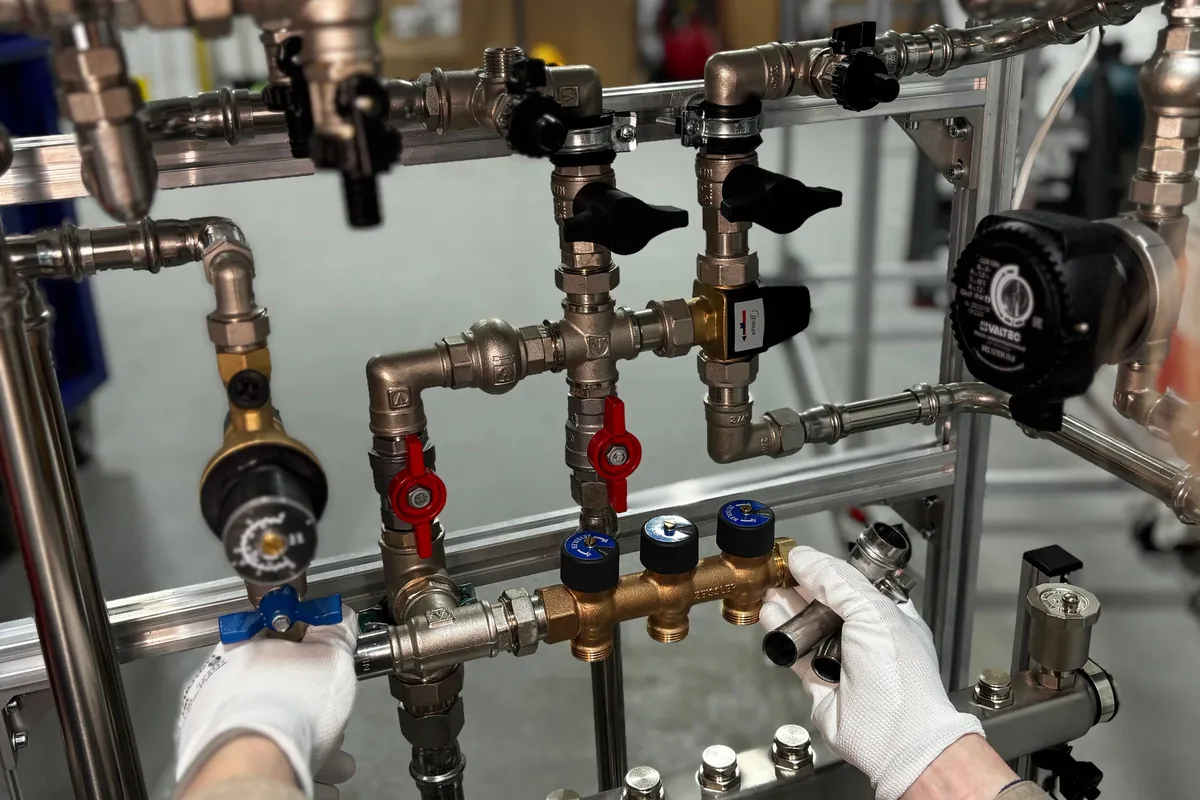
If you have moved to Norwich from a soft-water part of the country, the first thing you notice is the kettle. Within a fortnight there is a white crust on the element. The same crust is forming, more slowly and out of sight, inside your boiler's heat exchanger, your hot water cylinder and every hot pipe in the house.
This guide explains why the water here is hard, what limescale does to each part of a plumbing and heating system, how to spot the early signs, and which of the many products sold as a cure are worth the money. It is written for people who own or let homes in Norwich and the towns around it, where hard water is simply part of the deal.
Why Norfolk water is hard in the first place
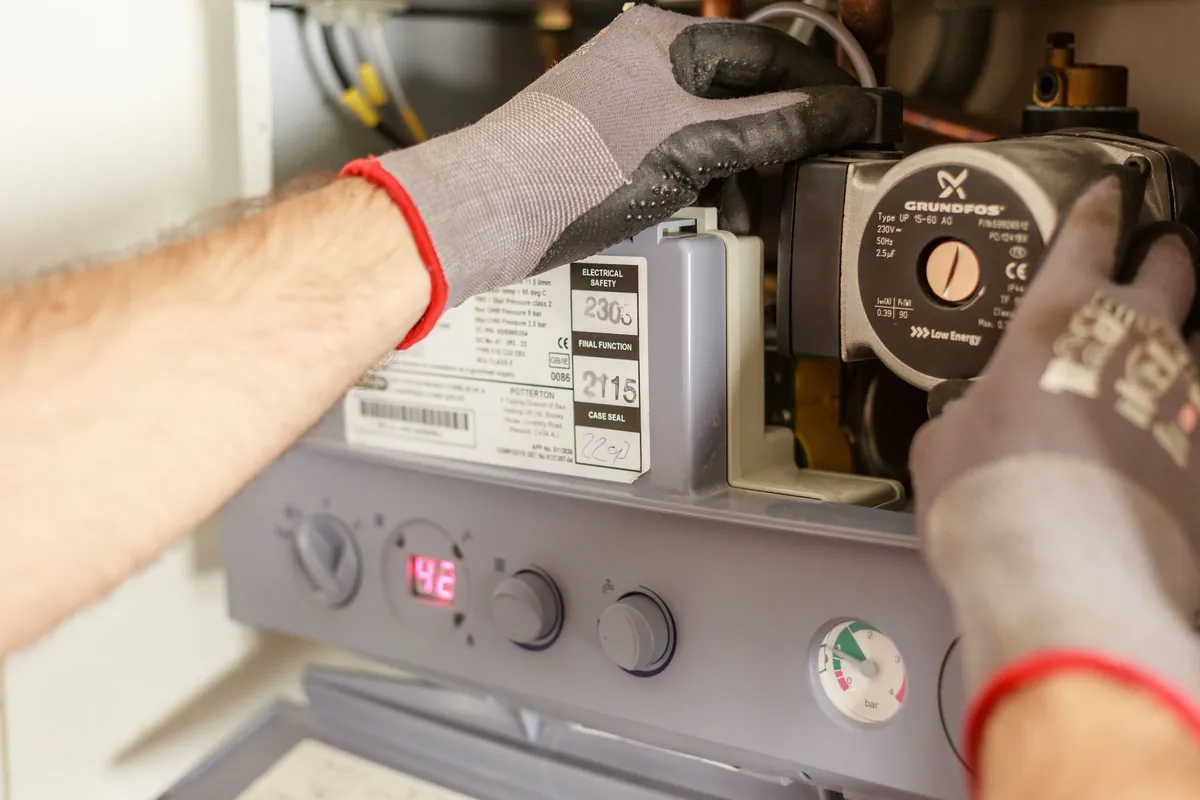
Water hardness is a measure of dissolved calcium and magnesium. Rain falling on Norfolk soaks down through chalk, which is almost pure calcium carbonate, and by the time it is pumped back up from the aquifer it carries a good deal of that chalk in solution. Most of the county's supply comes from groundwater rather than upland reservoirs, so it arrives at the tap hard, and in places very hard.
Your water company publishes the hardness for each supply zone; a Norwich postcode typically comes back somewhere in the "hard" to "very hard" bands, which in practical terms means well over 250 milligrams of calcium carbonate per litre. Soft-water areas such as the west of Scotland or Cornwall sit below 100.
None of this makes the water unsafe. Hard water is fine to drink and some people prefer the taste. The trouble starts when it is heated.
What happens when hard water is heated
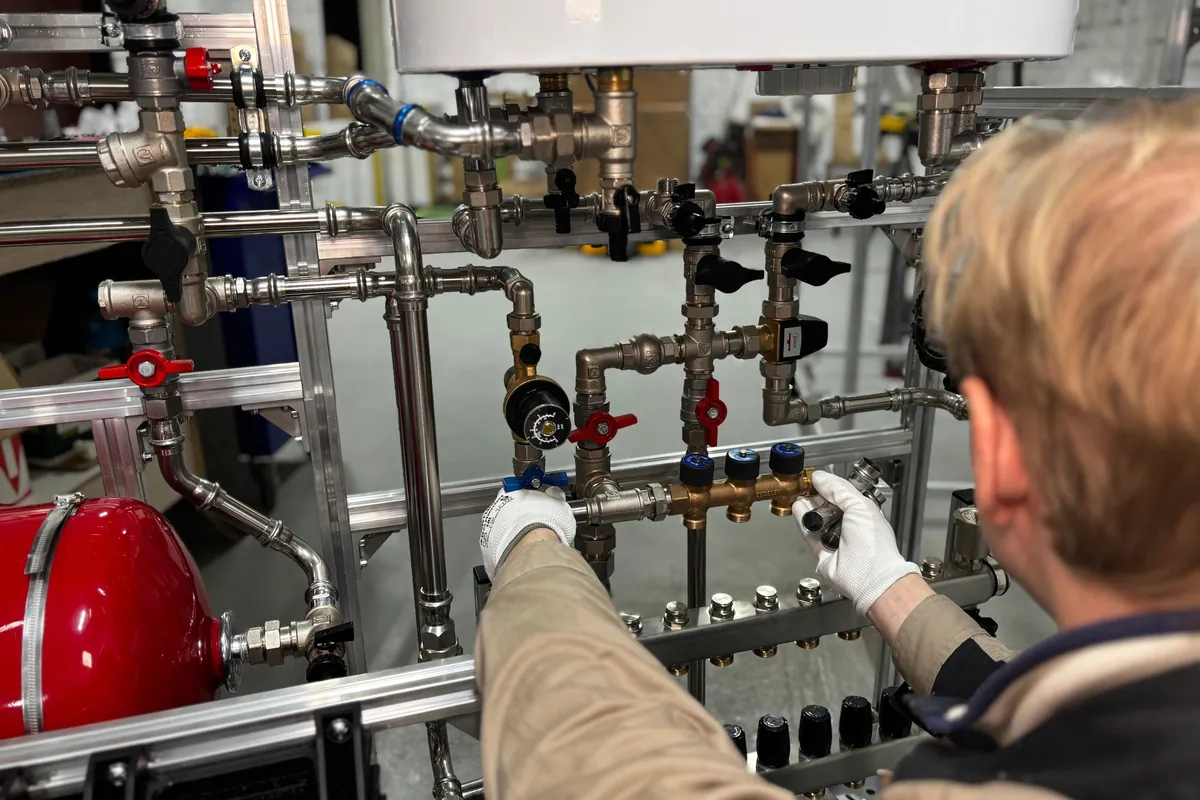
Calcium carbonate is less soluble in hot water than cold. Heat the water and some of the dissolved chalk comes out of solution and settles on whatever surface is hottest. In a kettle that is the element. In a combi boiler it is the plate heat exchanger that makes the hot water, and in a system boiler it is the main heat exchanger and the coil inside the cylinder.
The scale that forms is a poor conductor of heat. A layer only a couple of millimetres thick means the boiler has to burn longer to push the same heat through into the water, which shows up first as higher gas use and then as the boiler running hotter than it was designed to. Metal that is repeatedly overheated on one side fatigues, and that is how a heat exchanger eventually cracks or a cylinder coil pinholes.
The sound a scaled boiler makes is distinctive: a rumbling or "kettling" as water trapped behind the scale flashes to steam. If your boiler has started doing that, it is telling you something.
The signs to look for around the house
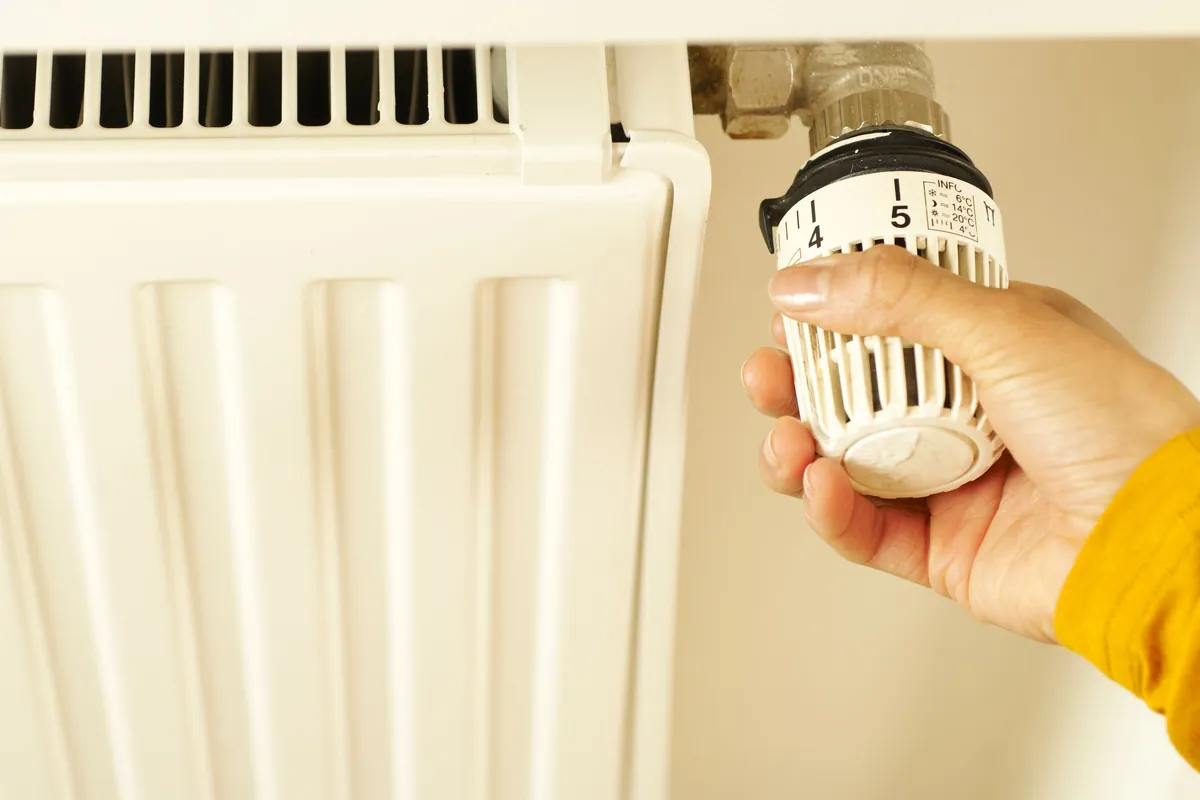
You do not need a test kit to know whether scale is building up. Walk round the house and look for these.
- Shower heads and tap aerators that spray unevenly or lose pressure. Unscrew one and the holes will be half blocked with white crust.
- Hot water that runs slower than cold at the same tap. The hot pipework is narrowing from the inside; the cold pipework is not.
- A combi that runs hot then cold in the shower. The plate heat exchanger is partly scaled and cannot pass enough water to keep the temperature steady.
- An immersion heater that trips or takes far longer to heat the cylinder than it used to. Scale on the element is insulating it from the water.
- White marks on the glass shower screen, the draining board and inside the dishwasher door.
- Rumbling from the boiler a few minutes after it fires.
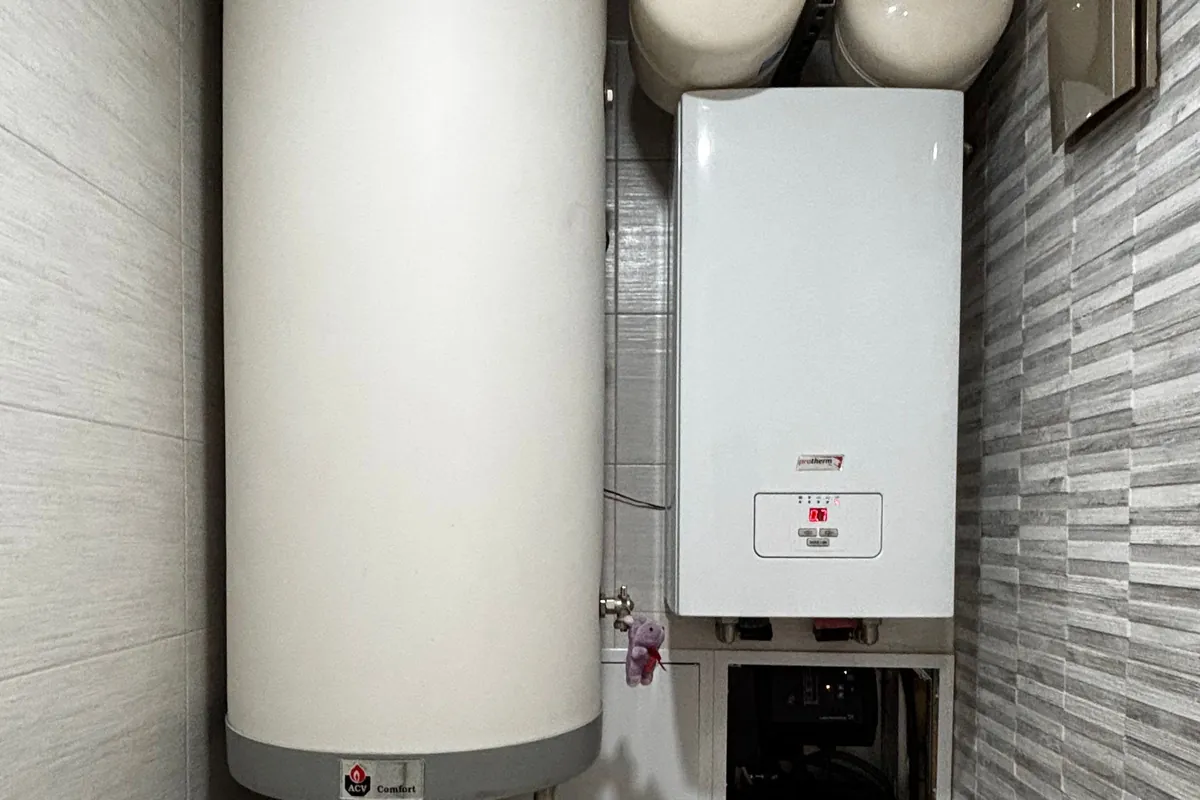
Any one of these on its own is a nuisance. Three or four together mean the scale has reached the parts you cannot see, and it is worth having the boiler or cylinder looked at before the heating season rather than after the first breakdown.
What it costs you if it is left
The immediate cost is fuel. A scaled heat exchanger transfers heat less efficiently, so the boiler burns for longer to reach the same temperature. Over a winter that adds up, although exactly how much depends on the boiler and how heavily it is scaled.
The larger cost is parts. A plate heat exchanger on a combi is a routine replacement job in a hard-water area, and a main heat exchanger is one of the most expensive components on any boiler. A cylinder coil cannot be replaced on its own; the cylinder goes. Scale is the single most common reason a boiler that should last fifteen years is replaced at ten.
There is also a safety angle that rarely gets mentioned. A combi that overheats because of scale relies on its thermostat and overheat cut-out to shut it down. Those devices are tested at a boiler service, which is one more reason the annual visit matters more here than it does in a soft-water town.
Which fixes are worth paying for
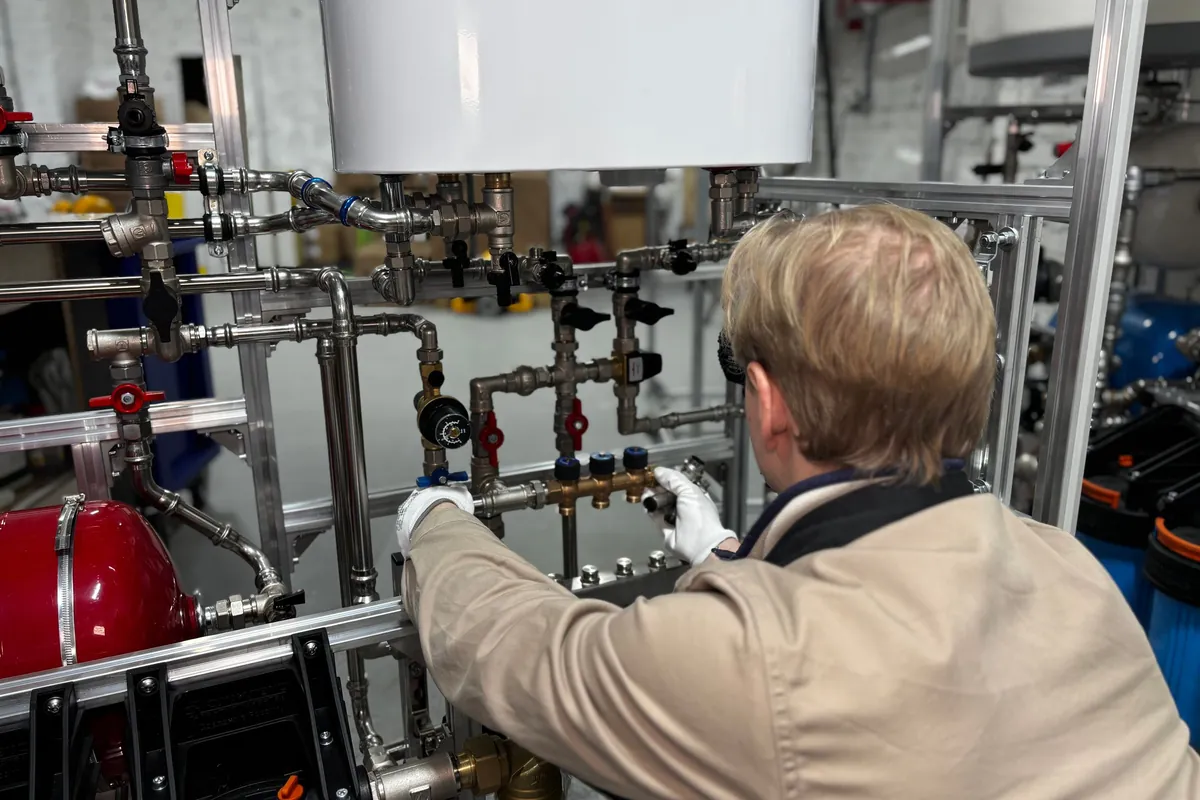
There is a whole shelf of products sold as the answer to hard water. They fall into three groups, and only two of them are worth your money.
Scale inhibitors on the boiler feed
A small in-line device, usually a cartridge of polyphosphate or a magnetic or electrolytic unit, fitted on the cold feed to a combi. These do not remove hardness; they change how the calcium crystallises so it is less likely to stick. They are cheap, they are a reasonable first line of defence, and most boiler manufacturers now ask for one in hard-water areas. Cartridge types need refilling every year or so, which is easy to do at the same time as the service.
A whole-house water softener
The only thing that actually removes hardness. A softener swaps calcium and magnesium for sodium through an ion-exchange resin and regenerates itself with salt you top up every few weeks. Fitted on the incoming main with a hard-water tap left for drinking, it protects every appliance in the house. It costs more up front and needs a bit of space under a sink or in a garage, but it is the fix that ends the problem rather than slowing it down. Households with a combi and a family showering every day tend to get the most from one.
Things that do not do much
Stick-on magnets, plug-in "electronic descalers" and clip-on gadgets sold online have very little independent evidence behind them. If a product claims to soften water without salt and without any consumable, treat the claim with caution.
Dealing with the scale that is already there
Prevention is one job; the scale that has built up over the last ten years is another. Tap aerators and shower heads come off and soak in white vinegar overnight. A combi's plate heat exchanger can be chemically descaled in place by circulating a citric acid solution through the hot water side, which is quicker and far cheaper than replacing it, provided the scale has not already cracked the plates.
The heating circuit is a different matter. Radiators and the primary side of the boiler do not scale in the same way because the same water goes round and round, but they do fill with black magnetite sludge, which is a separate problem with a separate cure. If radiators are cold at the bottom or the boiler is noisy on the heating rather than the hot water, the answer is usually a power flush rather than a descale.
A cylinder that has scaled heavily is harder to save. Immersion elements can be swapped, but a scaled coil stays scaled. When a vented cylinder is on its way out, it is worth pricing an unvented replacement with a softener at the same time, because a new hot water cylinder fed with softened water should last a great deal longer than the one it replaces.
Questions people ask
Is hard water bad for my health?
No. Hard water is safe to drink and cook with, and it contains a little dietary calcium and magnesium. The problems are all on the appliance side.
Will a water softener void my boiler warranty?
Most manufacturers are happy with softened water and several ask for a scale inhibitor in hard areas. A few specify that the boiler's own fill point should be on unsoftened water, so it is worth checking the installation manual for your model before the softener is plumbed in.
How often should a scale inhibitor cartridge be changed?
Usually once a year, and the easiest time is during the annual boiler service so both are done in one visit.
Can I descale a combi boiler myself?
Not sensibly. It involves isolating the boiler, connecting a circulating pump to the hot water side and running an acid solution through, then neutralising and flushing it. It is a job for someone who does it regularly.
Does a softener stop radiators sludging up?
No. Sludge in a heating circuit is corrosion, not limescale, and it is prevented with inhibitor in the system water and a magnetic filter on the return, not by softening the mains supply.
If the guide has not settled it, the contact page takes the details and someone calls back to arrange a look. The rest of the guides are in the resources archive.
What readers of these guides say once the job is done
Related
The services this guide points to
One visit often covers two of these. Mention both on the form and the price covers the lot.
Boiler Service
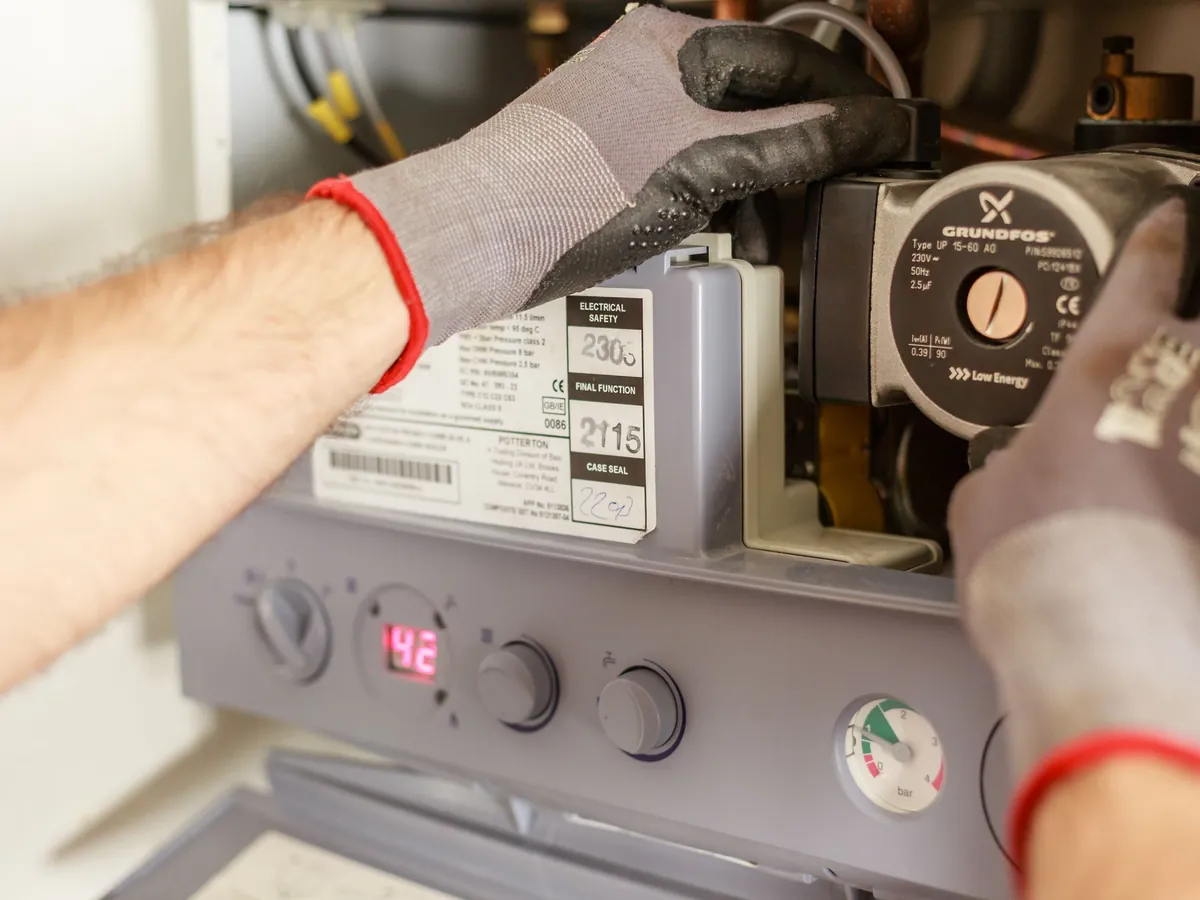
An annual boiler service that checks combustion, the flue, the seals and the safety devices, then leaves you with a record of what was found.
Hot Water Cylinder
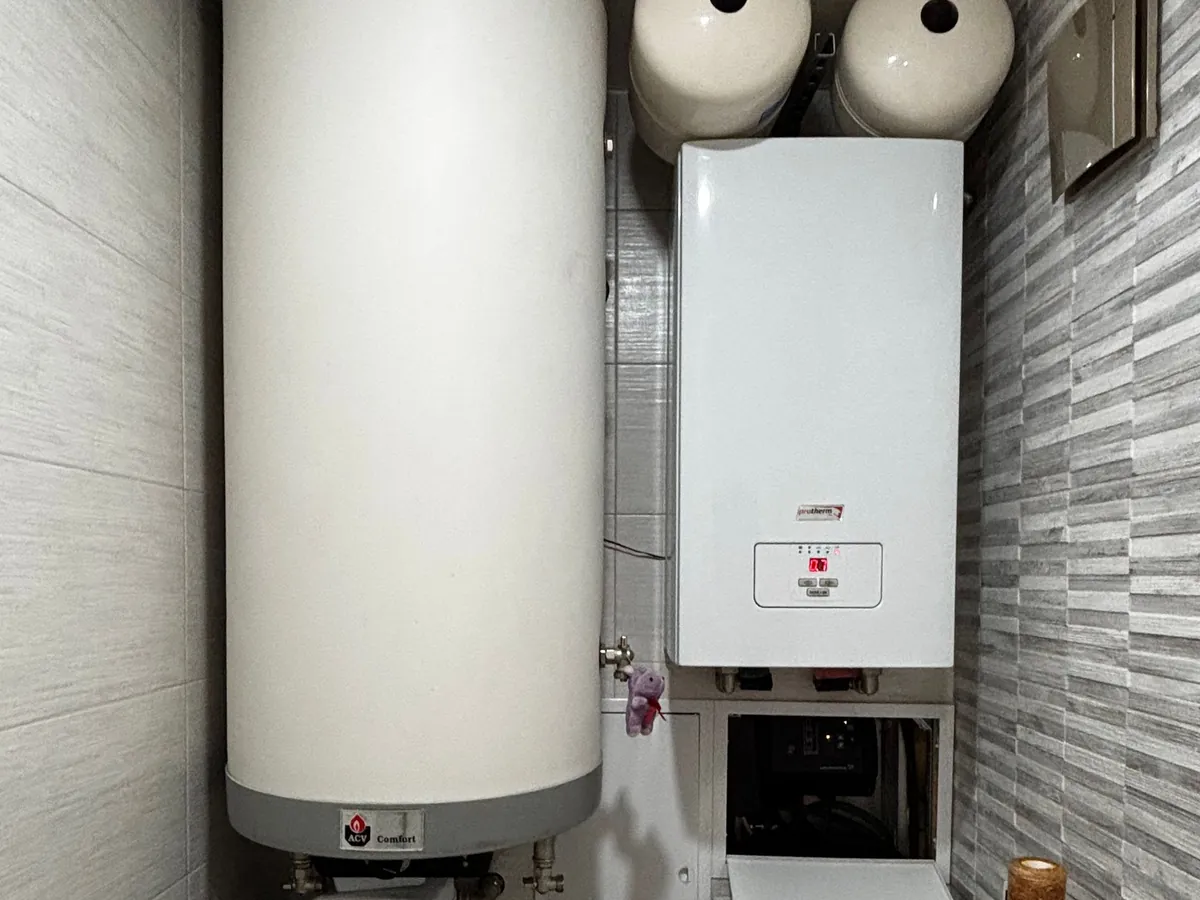
Vented and unvented cylinder replacement, repairs to immersion heaters, thermostats and expansion vessels, and advice on the right size for the household.
Power Flushing
A power flush pushes the sludge out of a heating system that has cold radiators, a noisy boiler or black water when it is bled, then protects it with inhibitor.
Quick Quote Online
Five-star ratedby homeowners and landlords
Tell us what the guide turned up and someone will call you back
What you found, what you have tried, and where you are. The price comes back before the visit is booked.
- A written price before any work starts
- Plumbing, heating, drains and bathrooms from one enquiry
- Norwich and every town within twenty miles